Calories in Meat and Poultry – Cooked Values per 100 g
Skinless chicken breast, turkey breast and pork tenderloin are the leanest common meats, at about 135 to 165 calories per 100 g cooked. Fattier cuts, skin and higher-fat mince can add 50 to 100 percent more.
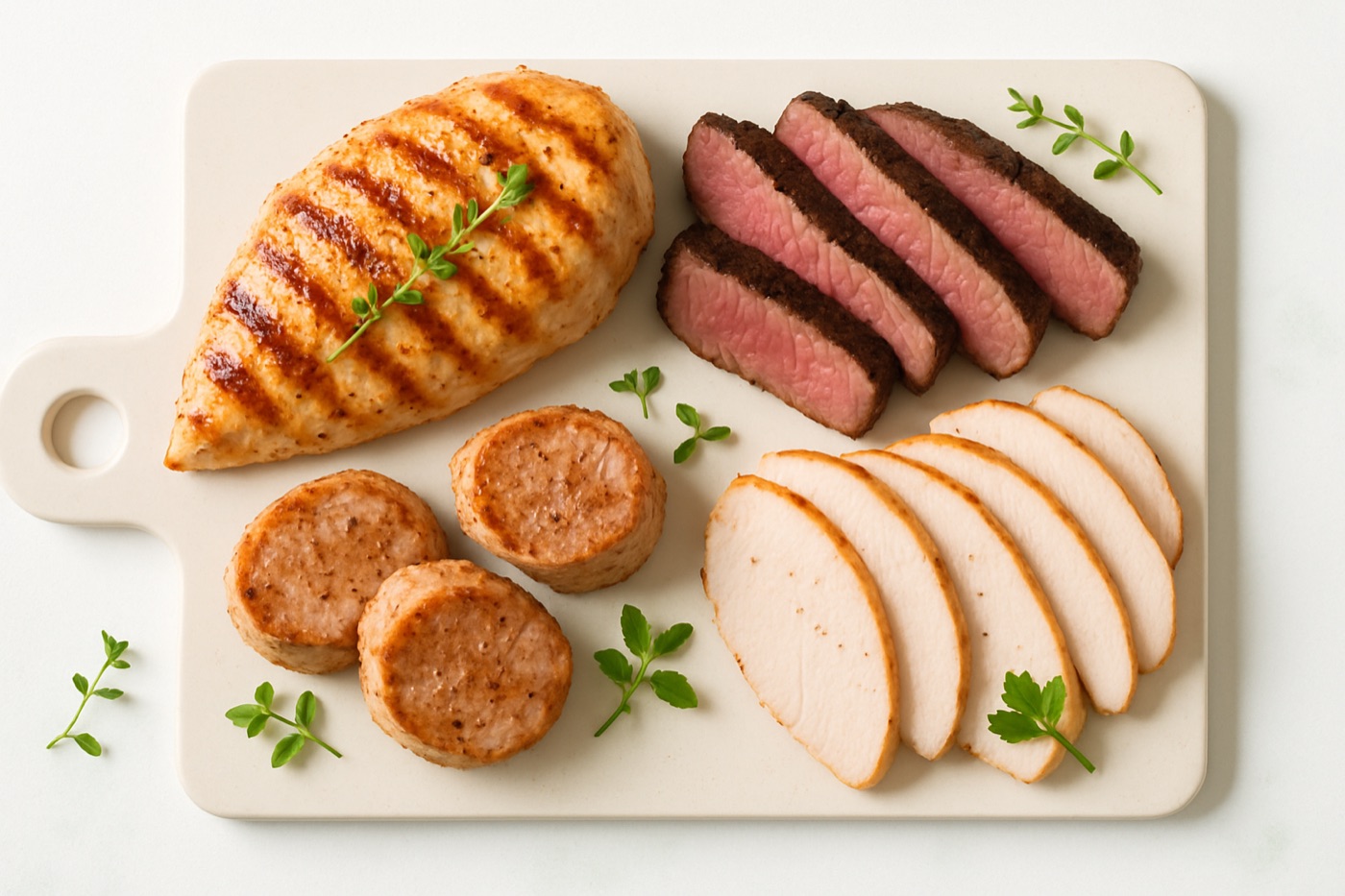
Meat is where calorie counts vary most within one food. “Chicken” can mean a lean skinless breast or a crispy wing; “beef” can mean a lean sirloin or 80 percent lean mince. The values below are for cooked meat without added fat, per 100 g (about 3.5 oz), because that is how most people eat and weigh it.
Calories in cooked meat and poultry
| Meat (cooked) | Calories per 100 g | Protein | Fat |
|---|---|---|---|
| Chicken breast, skinless, roasted | 165 | 31 g | 3.6 g |
| Chicken thigh, skinless, roasted | 209 | 26 g | 10.9 g |
| Chicken drumstick, skinless, roasted | 172 | 28 g | 5.7 g |
| Chicken wing, with skin, roasted | 290 | 27 g | 19.5 g |
| Turkey breast, skinless, roasted | about 147 | 30 g | 2 g |
| Ground turkey, 93% lean | about 200 | 27 g | 10 g |
| Pork tenderloin, roasted | 143 | 26 g | 3.5 g |
| Beef sirloin, lean, grilled | about 190 | 30 g | 7 g |
| Ground beef, 90% lean | about 217 | 26 g | 12 g |
| Ground beef, 80% lean | about 272 | 27 g | 17 g |
| Lamb leg, lean, roasted | about 190 | 28 g | 8 g |
| Item | Serving | Calories |
|---|---|---|
| Bacon, cooked | 1 slice (8 g) | 43 |
| Pork sausage, cooked | 1 link (about 25 g) | 80–90 |
| Beef hot dog | 1 frank (45–57 g) | 130–190, by size |
| Deli turkey breast | 2 oz (56 g) | 50–70 |
Values are approximate, rounded from USDA FoodData Central. Processed meats vary widely by brand; use the label where you have one.
Raw weight, cooked weight
Meat loses water as it cooks, typically around 25 percent of its weight for chicken breast and similar amounts for most cuts. The calories stay with the meat (apart from some fat that renders out). So:
- 100 g raw chicken breast is about 120 calories;
- after cooking it weighs about 75 g, still about 120 calories, which works out at about 165 per 100 g cooked.
Neither number is wrong. The mistake is mixing them: weighing cooked chicken and logging it against a raw entry undercounts by about a quarter. Most calorie counters label entries “raw” or “cooked”; check which one you pick.
Skin, fat and mince
- Skin roughly doubles the fat in a piece of chicken. Removing it after cooking is fine; most of the fat is in the skin itself.
- Visible fat on steaks and chops adds a lot. Trimming it before eating makes the lean values above more accurate.
- Mince percentages refer to fat by weight before cooking. Draining the fat after browning removes some of it, but labels and database entries for “pan-browned” mince already reflect typical cooking.
Portions to know
| Portion | Approximate size | Chicken breast calories |
|---|---|---|
| 3 oz cooked | A deck of cards or your palm | about 140 |
| 100 g cooked | A slightly larger palm | about 165 |
| One whole breast | 150–200 g cooked | 250–330 |
| Restaurant main | Often 200–250 g cooked | 330–410, before sauces |
Cooking method
Grilling, roasting, poaching and air-frying add little or nothing. Pan-frying adds whatever fat you use: about 120 calories per tablespoon of oil, part of which stays in the pan. Breading and deep-frying add the most; a breaded, fried chicken breast can have half as many calories again as a plain roasted one.
Related
For fish and seafood, see the seafood calorie chart. For eggs and dairy proteins, see dairy and eggs. To work out a protein target, see our explainer on counting macros.
Other calorie charts
- How many calories are in a chicken breast?
- Skinless, roasted chicken breast has about 165 calories per 100 g (3.5 oz), with about 31 g of protein. A whole cooked breast often weighs 150 to 200 g, so it can be 250 to 330 calories.
- Should I weigh meat raw or cooked?
- Either works, as long as the entry matches. Meat loses about a quarter of its weight in cooking, so 100 g raw chicken breast becomes roughly 75 g cooked with the same calories. Many people find weighing raw more consistent.
- Which meat has the most protein per calorie?
- Skinless chicken breast, turkey breast and pork tenderloin, at roughly 19 to 22 grams of protein per 100 calories. Lean fish such as cod and shrimp are similar.