Calories in Fish and Seafood – Cooked Values per 100 g
White fish and shellfish are among the lowest-calorie protein foods, at about 100 to 130 calories per 100 g cooked. Oily fish such as salmon, mackerel and sardines have more calories, mostly from healthy omega-3 fats.
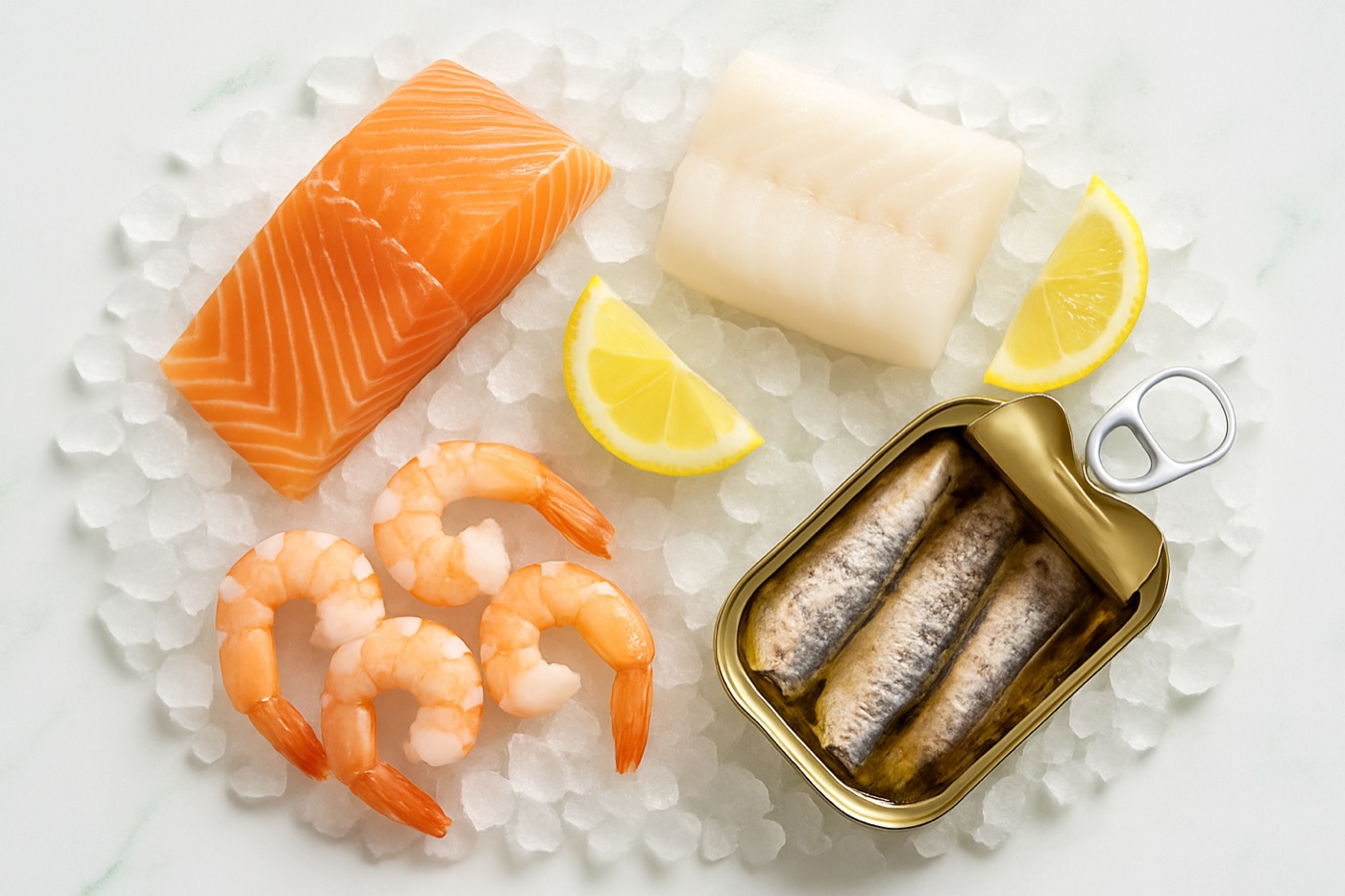
Fish is easy to count once you know which group it belongs to. White fish and shellfish are very lean. Oily fish is higher in calories because of its fat, which is mostly the omega-3 kind that dietary guidelines encourage. Both are excellent protein sources. Values below are for cooked fish without added fat, per 100 g (about 3.5 oz).
Calories in cooked fish and seafood
| Fish (cooked) | Calories per 100 g | Protein | Fat |
|---|---|---|---|
| Cod | 105 | 23 g | 0.9 g |
| Shrimp | 99 | 24 g | 0.3 g |
| Tilapia | 128 | 26 g | 2.7 g |
| Tuna, canned in water, drained | 116 | 26 g | 0.8 g |
| Tuna, canned in oil, drained | 198 | 29 g | 8.2 g |
| Rainbow trout, farmed | about 170 | 24 g | 7 g |
| Salmon, Atlantic, farmed | 206 | 22 g | 12.4 g |
| Sardines, canned in oil, drained | 208 | 25 g | 11.5 g |
| Mackerel, Atlantic | 262 | 24 g | 17.8 g |
Values are approximate, rounded from USDA FoodData Central.
Lean against oily
Lean fish such as cod, haddock, pollock, tilapia and most shellfish have under 130 calories per 100 g and very little fat. They are among the best protein-per-calorie foods available.
Oily fish such as salmon, mackerel, sardines, herring and trout carry more fat, which means more calories, but it is mostly long-chain omega-3 fat. Most dietary guidelines encourage eating oily fish regularly for heart health. For calorie counting, the practical point is simply that a salmon fillet is closer to a lean steak in calories than to a piece of cod.
Cooking and coatings
| Preparation | What it adds |
|---|---|
| Steamed, poached, baked, grilled | Almost nothing |
| Pan-fried in oil or butter | About 100–120 calories per tablespoon used |
| Breaded and fried (fish and chips, fish sticks) | Often doubles the calories of the fish |
| Creamy or butter sauce | 100–200 calories per serving |
| Tempura | A light-looking batter that absorbs a lot of oil |
A battered fish fillet from a fish-and-chips shop can be 500 calories or more before the chips.
Portions to know
- A typical fillet of salmon or white fish is 120 to 170 g cooked.
- A small can of tuna (about 140 g, 5 oz) holds roughly 110 to 120 g drained.
- Shrimp are often counted by number: about 10 to 12 large cooked shrimp weigh roughly 100 g.
Sushi
Sashimi is simply raw fish and easy to log. Rice adds up quickly in nigiri and rolls: a typical piece of nigiri is about 40 to 70 calories, and a standard six- to eight-piece roll is often 200 to 350, more if it contains tempura, cream cheese or mayonnaise-based sauce.
Related
See the meat and poultry chart for other protein foods and our explainer on counting macros to set a protein target.
Other calorie charts
- How many calories are in a salmon fillet?
- Cooked farmed Atlantic salmon has about 206 calories per 100 g. A typical fillet of 120 to 170 g cooked is about 250 to 350 calories.
- Is canned tuna good for weight loss?
- Tuna canned in water is one of the leanest protein foods, at about 116 calories and 25 g of protein per 100 g drained. Tuna canned in oil has roughly 70 percent more calories even after draining.
- How much fish should I eat a week?
- The Dietary Guidelines for Americans recommend about 8 ounces of seafood a week for most adults, choosing options lower in mercury, such as salmon, sardines, shrimp, cod and canned light tuna.