12 Calorie Counting Mistakes That Throw Off Your Total
Most calorie counts go wrong in the same places, cooking fats, drinks, weekends, serving sizes and raw-versus-cooked mix-ups. Fixing the dozen most common mistakes usually closes the gap between what the log says and what the scale shows.
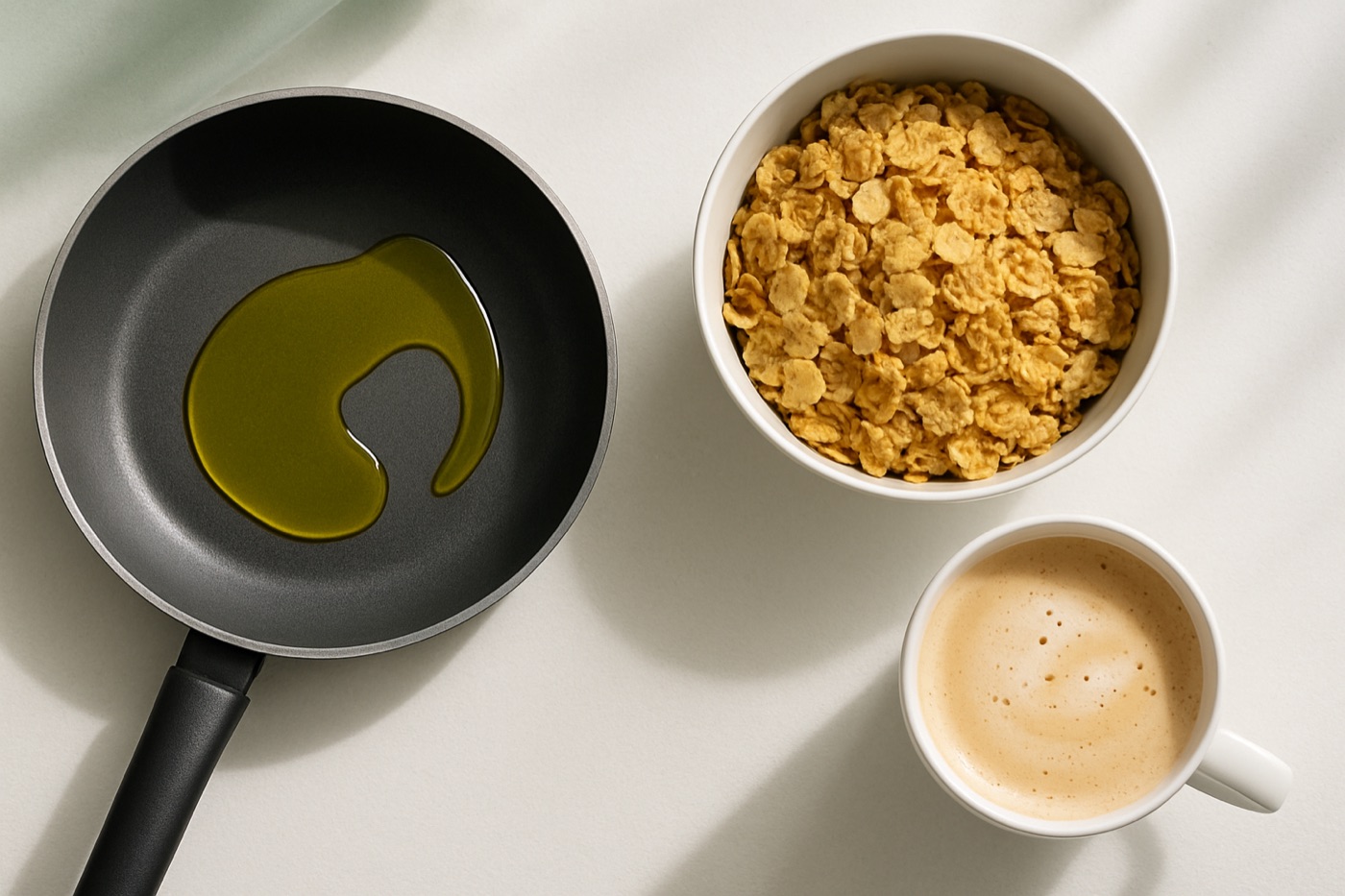
When the scale does not match the log, the log is usually the problem. Research comparing what people report eating with what they actually burn has found under-reporting again and again, and it clusters in predictable places. Here are the twelve most common mistakes, and the fix for each.
1. Free-poured oil
The mistake: “A drizzle” of olive oil in the pan, on the salad or over the vegetables. Why it matters: A tablespoon is about 120 calories, and a free pour is often two or three. The fix: Measure with a spoon for two weeks. After that, you will know what a tablespoon looks like in your pan.
2. Raw and cooked mixed up
The mistake: Weighing cooked rice or pasta and logging it as dry, or weighing raw meat and logging it as cooked. Why it matters: 100 g of dry rice is about 360 calories; 100 g of cooked rice is about 130. The fix: Check that every entry says raw or cooked, and match it to what you weighed. See the grains chart.
3. The label serving is not your serving
The mistake: Logging “1 serving” of cereal, crisps or ice cream without checking what a serving is. Why it matters: A bowl of cereal is often two or three label servings. The fix: Pour your usual amount into a measuring cup once, then adjust servings in the app.
4. Drinks left out
The mistake: Logging the meal but not the latte, the juice, the soda or the wine. Why it matters: A large milky coffee and a glass of wine together can be 350 calories. The fix: Log drinks as you order them. See the drinks chart.
5. Bites, tastes and leftovers
The mistake: The spoonful while cooking, the child’s leftover toast, the biscuit in a meeting. Why it matters: Five small bites a day can be 200 to 300 calories. The fix: Either log them or make a rule not to eat outside planned meals and snacks.
6. Weekends that go unlogged
The mistake: Careful Monday to Friday, nothing on Saturday and Sunday. Why it matters: Two unlogged days can erase a week’s deficit. The fix: Log roughly rather than not at all, and plan the bigger meals instead of hoping.
7. Restaurant portions logged as home portions
The mistake: Logging “1 cup pasta” for a restaurant plate that held three. Why it matters: Restaurant meals are often far larger and richer than database defaults. The fix: Use the chain’s published calories where available; otherwise choose the larger entry and add a tablespoon of fat for anything cooked.
8. Sauces, dressings and spreads
The mistake: Logging the salad and forgetting the dressing; logging the toast and forgetting the butter. Why it matters: Two tablespoons of creamy dressing can be 140 calories; a tablespoon of butter about 100. The fix: Give every sauce and spread its own entry.
9. Trusting the first database entry
The mistake: Picking the top search result without checking it. Why it matters: User-submitted entries can be wrong, incomplete or for a different product. The fix: Prefer verified entries, scan barcodes for packaged food, and compare against the label when an entry looks odd.
10. An activity level set too high
The mistake: Choosing “moderately active” because you exercise three times a week, while sitting most of the day. Why it matters: Each step up in activity level can add a few hundred calories to the target. The fix: Choose the lower level and adjust after three or four weeks of real data.
11. Eating back every exercise calorie
The mistake: Adding the full estimate from a watch or app to your budget. Why it matters: Wearable energy estimates are often high, and research has found large errors for energy expenditure in wrist devices. The fix: Eat back half at most, or none, and let the weight trend decide.
12. Judging the count by one weigh-in
The mistake: Changing everything because the scale went up after one salty meal. Why it matters: Water swings of a kilogram or more are normal from day to day. The fix: Compare weekly averages. If they have not moved in four weeks of honest logging, adjust by 100 to 200 calories.
A two-week audit
If your weight trend and your log disagree, spend two weeks fixing mistakes 1 to 9 before you change your target. Weigh the oils, nut butters, cheese, cereal, rice and pasta. Log every drink and every bite. Log the weekend. Most people find the gap without needing to eat less than they planned.
Related
See how to count calories for the full method and the calorie charts to sanity-check entries.
More on counting
- Why am I not losing weight when counting calories?
- The most common reasons are under-counted cooking fats, drinks and snacks, weekends that are not logged, serving sizes that are larger than the entry, and a calorie target based on an activity level that is too high. A two-week audit of these usually finds the gap.
- How much do people underestimate calories?
- Studies comparing reported intake with measured energy expenditure have repeatedly found that people under-report what they eat, often by hundreds of calories a day, and more so on days with more eating out or snacking.
- Should I eat back exercise calories?
- Cautiously. Activity estimates from watches and apps are often high. Many people eat back about half of the estimated exercise calories, or none, and let their weight trend decide.